Services

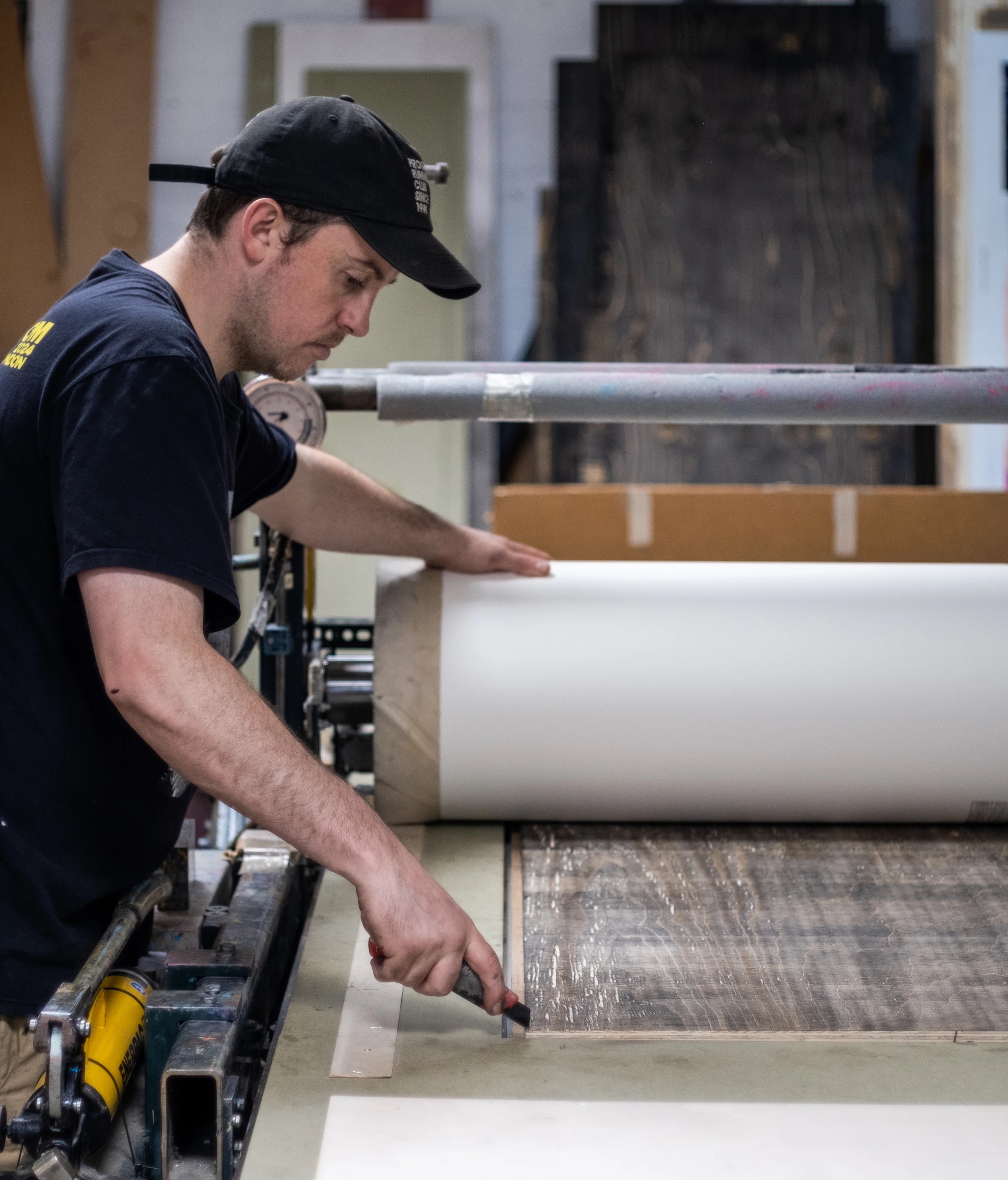
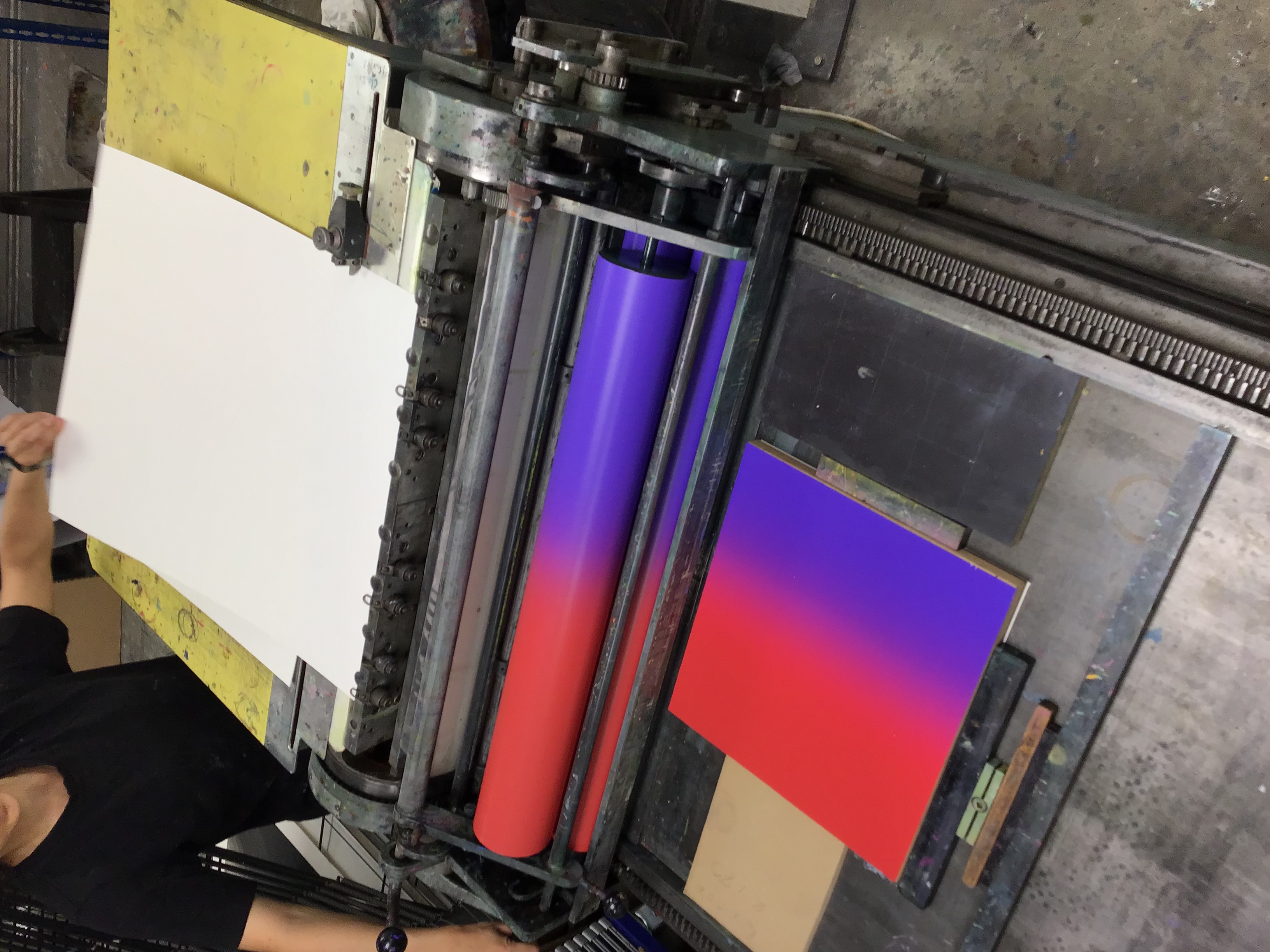
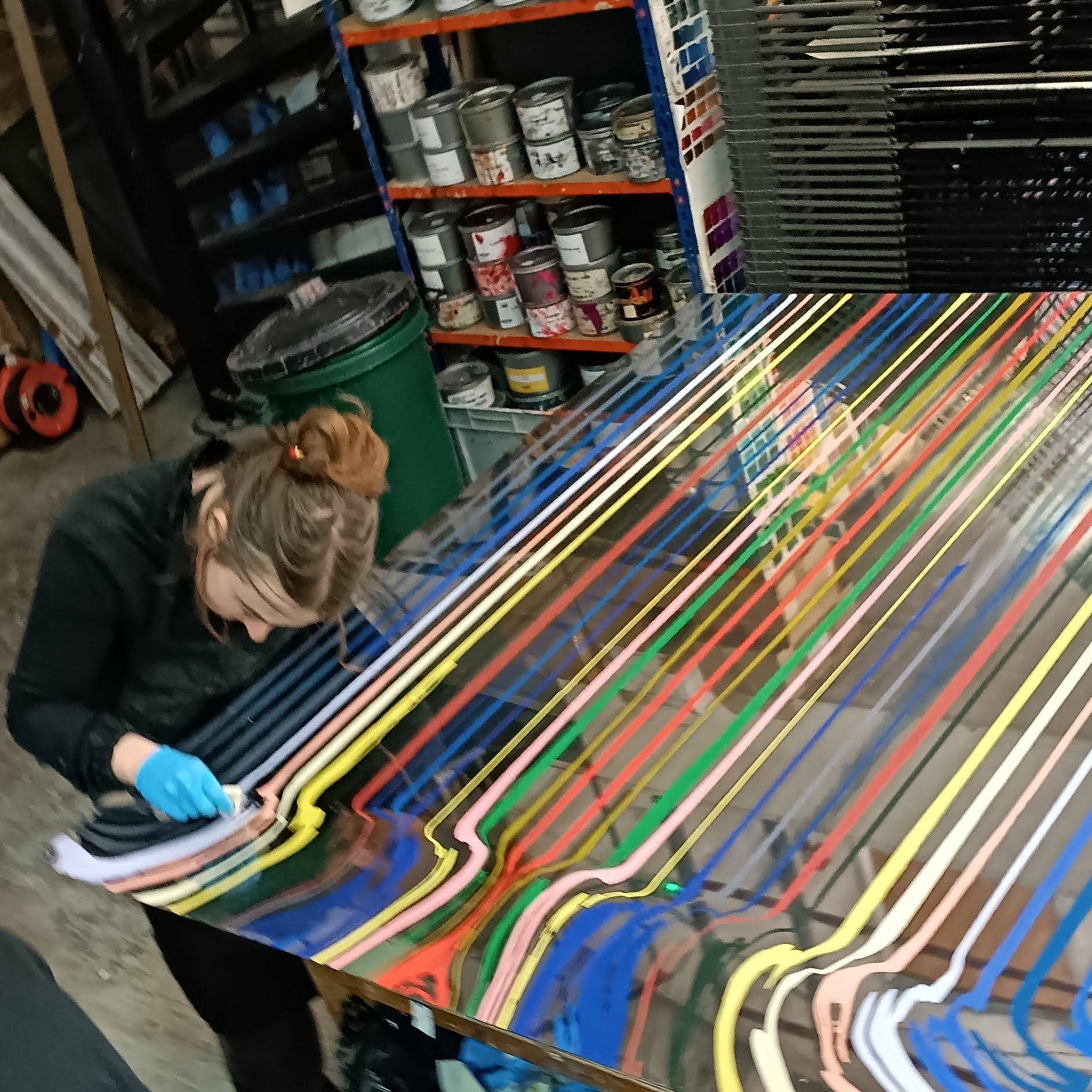
Printmaking at Warner Road Studios is approached as an artistic medium in its own right — one that offers artists new possibilities for experimentation, material exploration and expression. Every collaboration is shaped around the individual artist’s practice, with the studio providing both the technical expertise and creative environment needed to develop work through print.
Discuss a Project

Techniques

The term intaglio refers to a print made by a technique whereby the ink is transferred to the paper from lines or marks below the surface of the plate.

Ink is applied to the whole of the plate and then wiped back off the surface, leaving the image defined by the ink retained in the areas below the surface. The ink is then transferred by pressing a dampened sheet of paper onto the plate and into the inked areas by rolling them, together, through an etching press under great pressure.

Polymer gravure

A photo-based intaglio process using a light-sensitive polymer plate exposed to a positive image and washed out to create an etched surface. It captures fine tonal detail and continuous gradation without the toxic chemicals of traditional etching, making it a popular contemporary alternative.

Drypoint

A direct intaglio method where the artist scratches lines straight into the plate with a sharp needle, raising a metal burr along each groove. That burr holds ink and gives drypoint its characteristic soft, velvety, slightly blurred line, though it wears down quickly under the pressure of printing.

Hardground

A traditional etching technique where the plate is coated with an acid-resistant ground, through which the artist draws to expose the metal before biting the lines in an acid bath. It produces crisp, controlled lines with a quality similar to pen drawing.

Softground

An etching method using a soft, tacky ground that lifts away wherever it is pressed, allowing the artist to capture textures, fabric, or the grainy quality of a pencil line. The exposed areas are then etched, reproducing the impression with a soft, tactile character.

Aquatint

An intaglio process for creating areas of tone rather than line, achieved by dusting the plate with fine rosin particles that resist acid and leave a network of tiny bitten pits. Varying the exposure time builds up washes and gradations resembling watercolour or ink wash.

Photogravure

A photographic intaglio process where a continuous-tone image is transferred to a copper plate via a light-sensitive tissue and etched to varying depths. Prized for its exceptionally rich, subtle tonal range, it produces some of the most luminous and detailed prints in the medium.

Carborundum

A modern additive technique where carborundum grit (silicon carbide) is applied to the plate with glue or medium to build a textured, ink-holding surface. It yields dense, painterly areas of deep colour and tone, well suited to bold, expressive mark-making.

Collograph

A print made from a plate built up collage-style with materials such as card, fabric, and textured media glued to the surface. Depending on how it's inked and wiped, it can print as intaglio, relief, or both, giving richly textured, versatile results.

This term is used to describe methods of printing that involve the transfer of ink to paper (or other material) from the raised surfaces of a block or plate. It is therefore the opposite of Intaglio printing, though the two techniques can be combined.

Common methods of relief printing use Lino or Wood blocks which are gouged with special cutting tools, leaving raised areas to create the image.

Woodcut

Woodcut is the oldest method of printing and involves cutting a design into the surface of a board or block of wood. The areas that remain after cutting hold the ink which is usually applied with a roller. The paper is laid onto the inked surface and the ink is transferred by pressing the paper down either in a press or by hand. One attractive feature of woodblock printing is the appearance of the wood-grain in the image.

Linocut

Lino is a material manufactured from linseed oil and, when warmed, is much easier to cut than wood, not having a grain and being softer. It is possible, therefore, to cut smoother and more precise lines.

Photo relief

Polymer relief printing uses the same material as photo-polymer gravure and enables the creation of photographic imagery as a relief print. The polymer plates are indeed manufactured for Letterpress, a sophisticated form of relief printing.

Letterpress

A relief printing technique in which raised type, blocks, or plates are inked and pressed directly onto paper, transferring the design in a single firm impression. Historically the dominant method for printing books and ephemera, it has been revived as a craft prized for its tactile quality — the subtle debossed impression left in the paper giving each print a distinctive depth and character.

Monotype / Monoprint

The key characteristic of a monoprint or monotype is that no two prints are identical, though many of the same elements may be present.

All or part of a monoprint is created from a matrix, etched plate, woodblock or such, whereas a monotype image is painted directly onto a smooth unaltered plate and then transferred to paper in a press. These prints are sometimes hand-colored after they are printed.